Walls and raiings
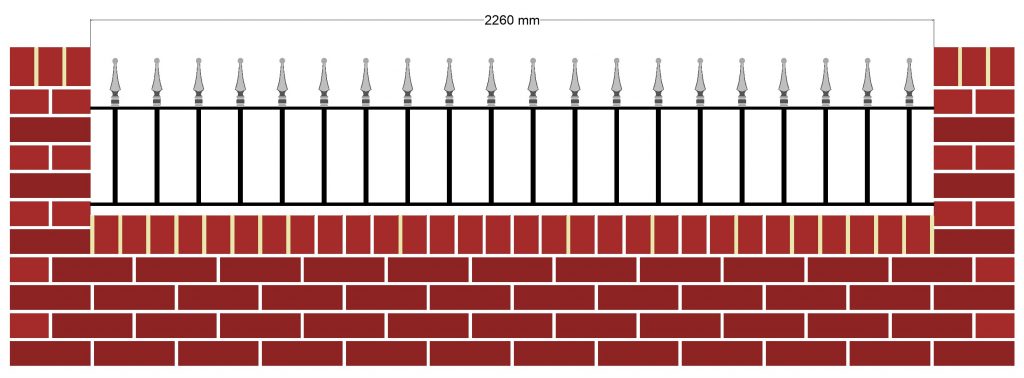
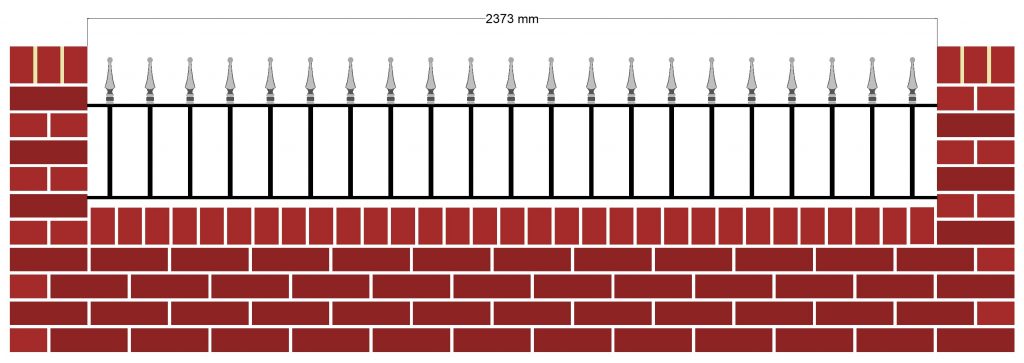
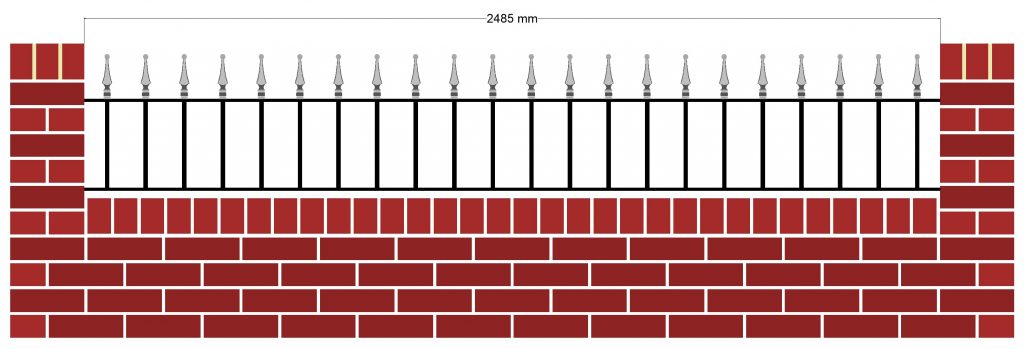
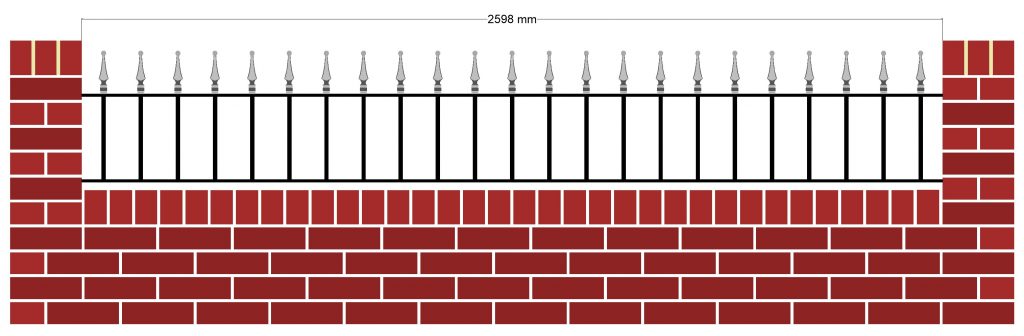
This is a guide of what a wall and railing would be using a standard UK brick. They start at 4 bricks between piers and then go up in half brick intervals. This might help if you are starting with a blank canvas and thinking of having a brick and iron boundary fence. These are all based on a standard 215mm UK brick with a nominal 10mm mortar joint. Actual size will vary depend on brick layer, as some seem to favour larger brick joints. This would increase the size of the railing slightly. What you might notice is the sizes commonly advertised on the internet are not always useful sizes.
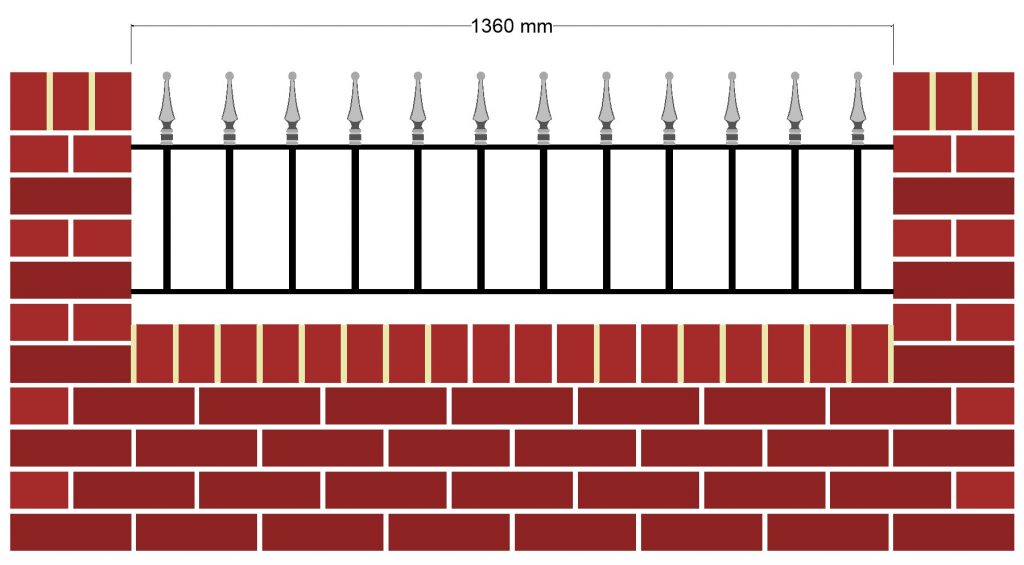
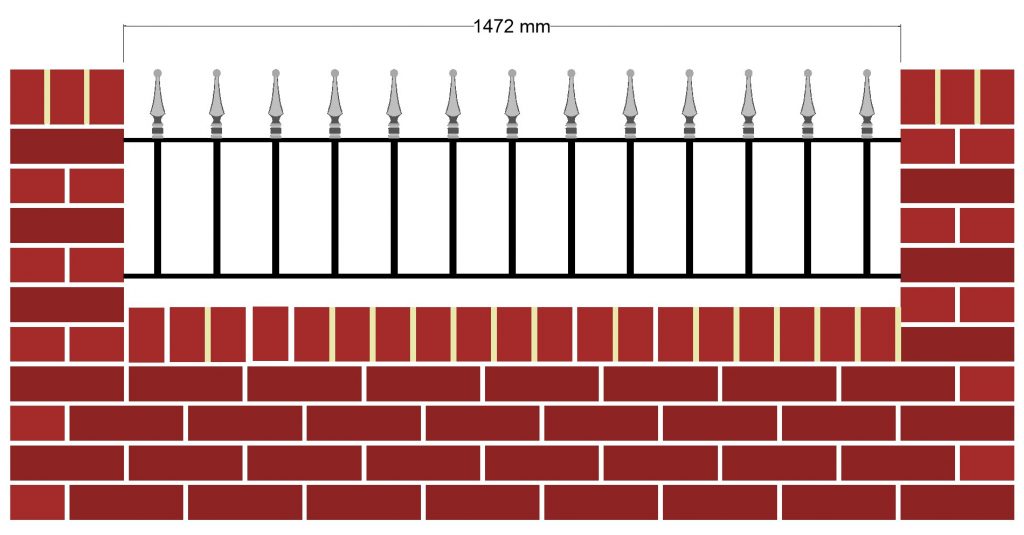
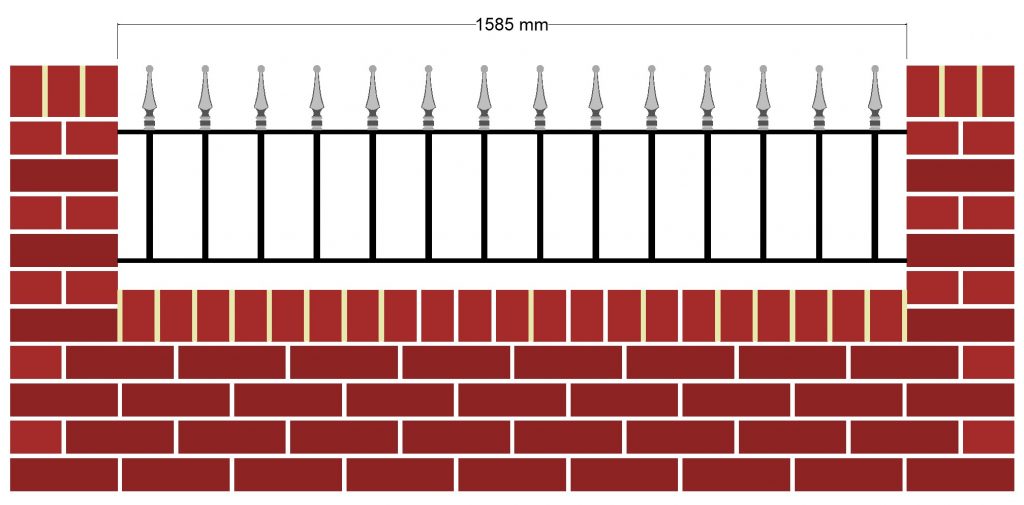
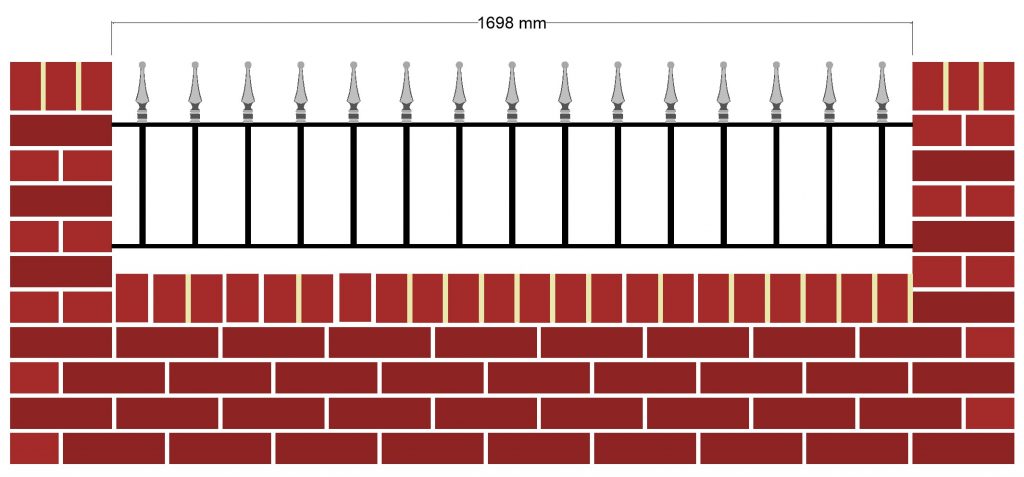
Each wall example has a railing drawn based on fixed space type with 100mm gaps between bars with 12mm uprights. This gives a guide to how many bars would be in the railing. This does allow you to see the upright bar count, based on wall size. It is a good basis for designing you own railing design pattern.
910 mm railing size.
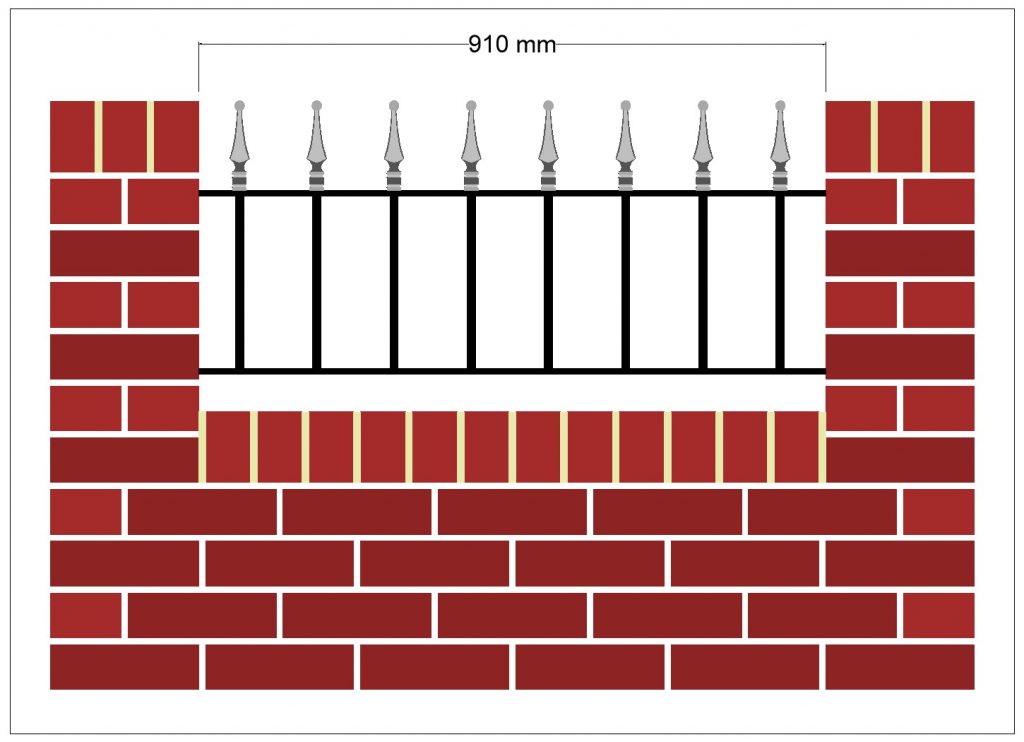
With 4 whole bricks between piers, this gives a railing size of 910mm, depending on mortar joint sizes. There are 8 upright bars, a centre gap rather than a centre bar.
1022mm railing size.
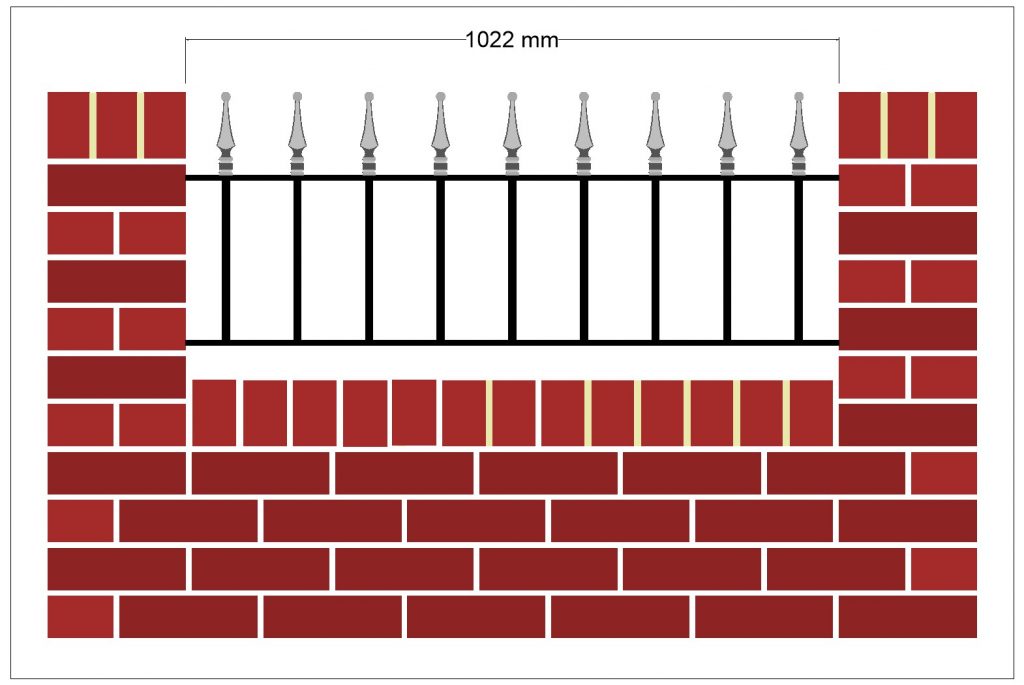
4 and half bricks between piers, should give an opening size of 1022mm with 9 uprights in the railing.
1135mm railing size
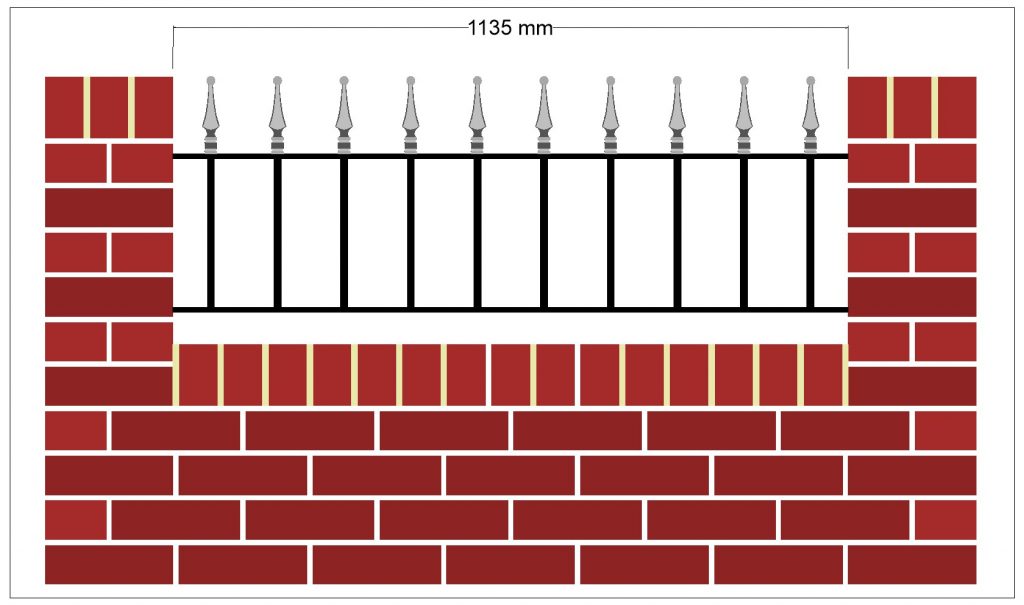
1135mm gap
1247mm railing size
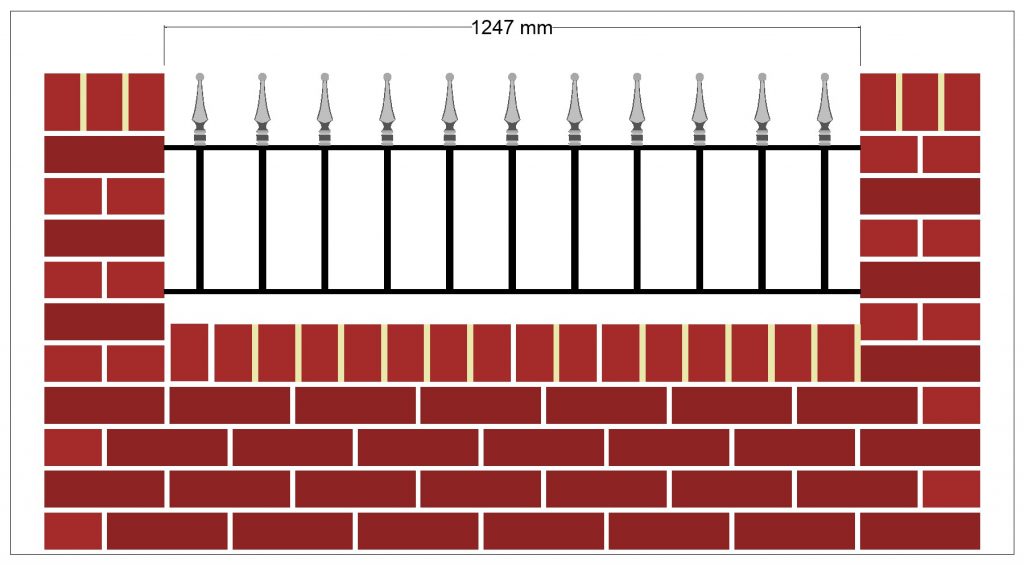
1360mm gap
1472mm railing size
1585mm gap
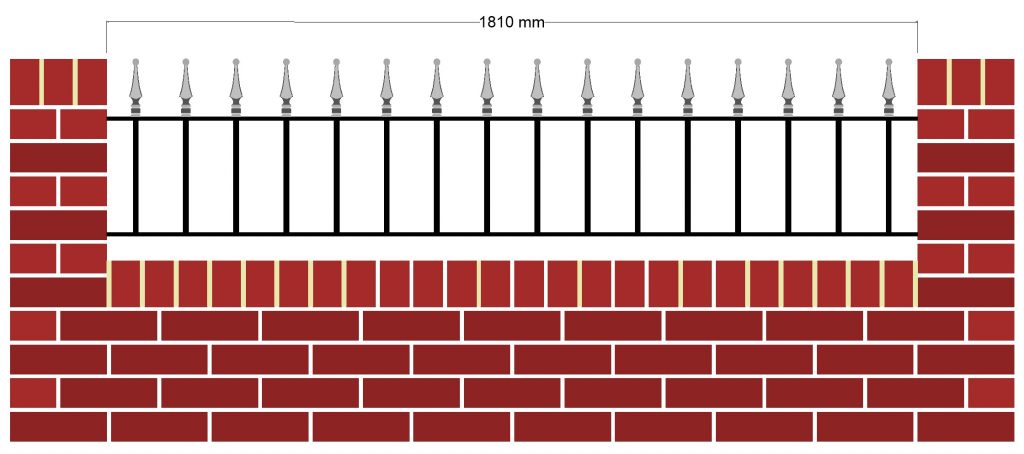
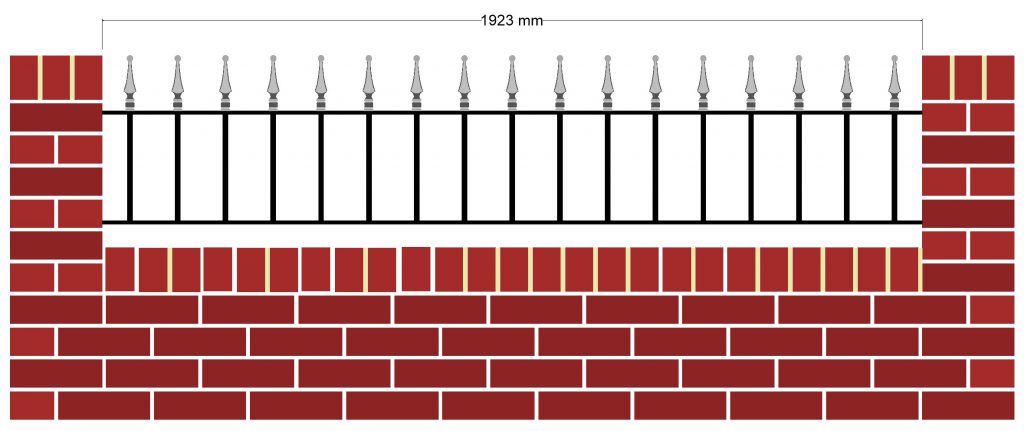
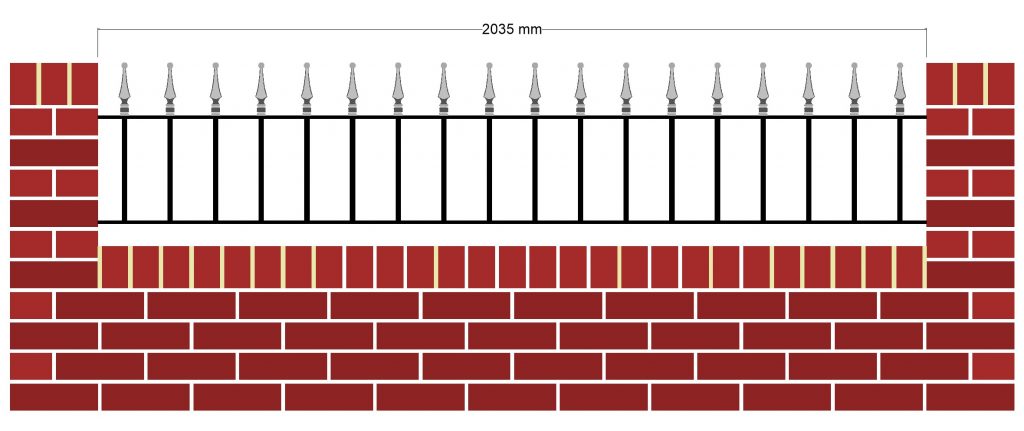
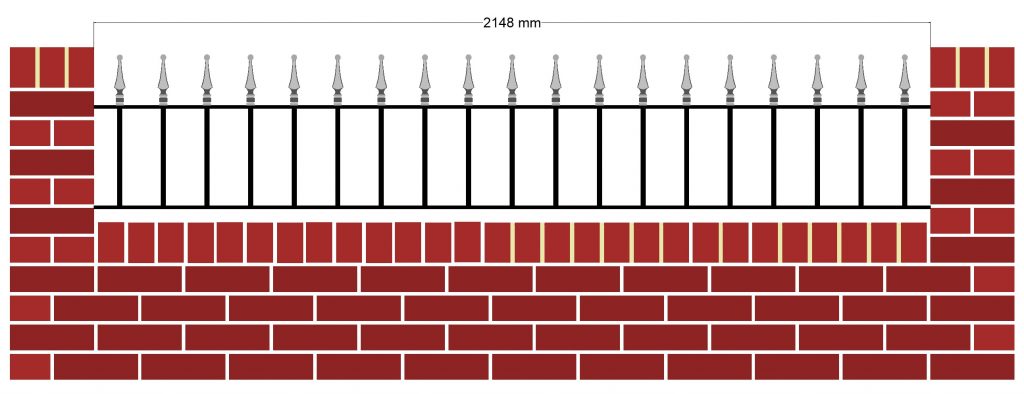
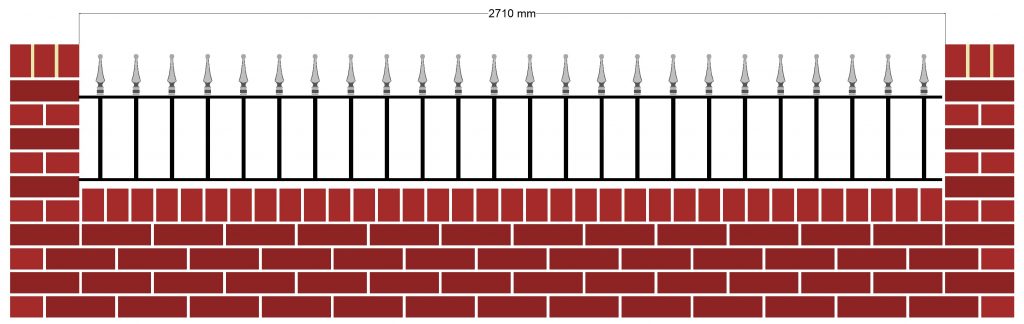
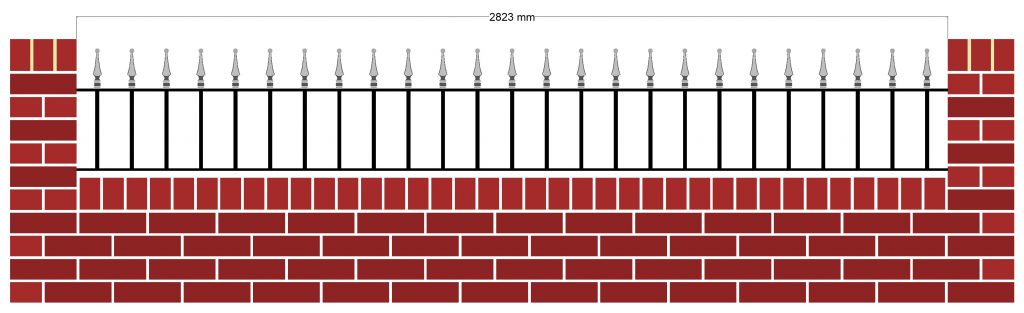
Notes
There is no perfect relation between bricks and bar gaps. But what is perhaps interesting is the standard 6ft gap (1829mm), which is so commonly available from internet suppliers is a bad size. For two reasons. It forces brick layers to open up the recommend mortar joint from 10mm to 12mm to make it happen. The second reason is steel is sold in 6mtr (20ft) long lengths, to make a single railing of 6ft long. you need 12ft of steel to cover the top and bottom horizontal. This leaves an 8ft off cut, which is fine because you cant that to get another 6ft piece. But it then leaves you 2 ft of scrap steel.
This scrap piece is technically useless, but what is perhaps worse our waste level is 10%. Where as the next size up a 1923mm would reduce waste to 4%. 1923mm when used on a 100mm fixed spacing system also gets a centre bar.
The reality is no size is perfect, because you have to work with the space you have for building a wall. If this is the front of a garden, on a terraced house. it is going to be the width of the house minus a gap for a front gate. The front gate is at the end of the path, which is inline with the front door. That front door ,may not be central, meaning the gate might not be central. This leave you with a different size to the left and right of the gate. So whilst a 6ft panel might work on one side of the house, it may not work for the other side.
This usually makes set size panels completely useless