Railings
This is split into a few sections frame design. Top decoration, technical details, this applies to wall railings and fencing.
This page should have been read in conjunction with the other related pages
Frame design.
Most railings you see will be flat, a top and bottom horizontal bar with upright bars for infill. Almost like a ladder laying on its side, but it doesn’t have to be like this.
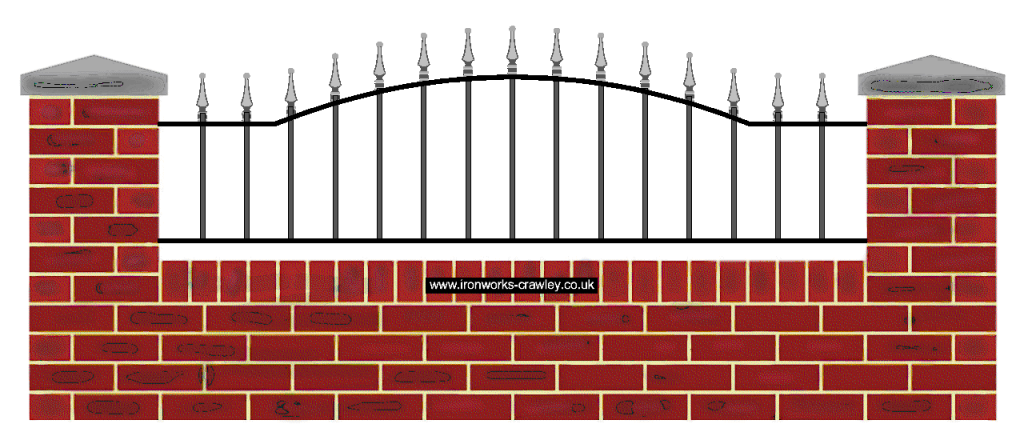
This is what i refer to as a shouldered arch. It starts flat and stays flat for a bit then rises into an arch, then returns flat. You have great control over this type of arch, The shoulders can be as long or short as you like. The arch part can be as shallow or tall as required.
Where multiple railings are required, it is ideal if all the panels are the same length. Although with this type of arch it is possible to use where there are different size panels. By keep the arch the same and taking up any change of length on a different panel, by increasing or decreasing the length of the shoulders.
This is more expensive than a standard flat railing, because of the increased work required. Each arch has to be formed from a flat piece of bar, bent into shape. Then the shoulders have to be welded on, and all welds blended to look like one piece construction. Each upright has to be individually measured and cut to size, rather than setting a saw stop like you would when all parts are the same length.
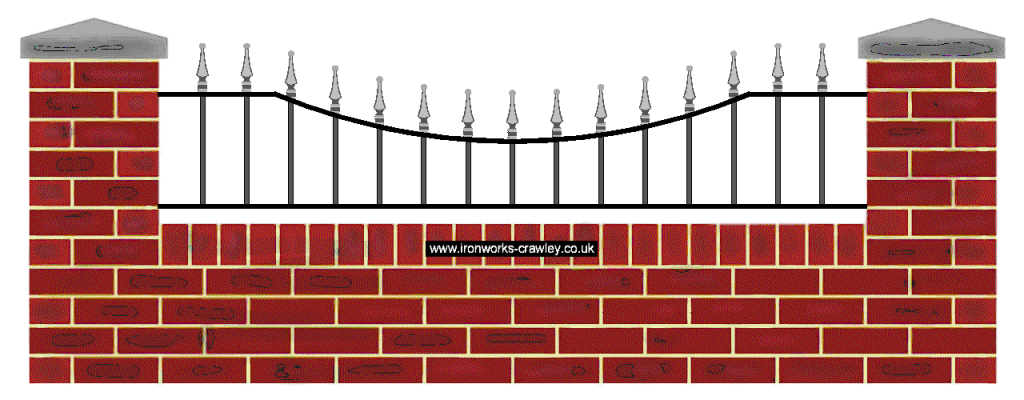
This is what i refer to as a shouldered dip. It is exactly the same as the shouldered arch in every way. except that it is welded on upside down so to speak. This usually doesn’t work that well on short wall railings, unless you have a very shallow dip. But works great on taller railings
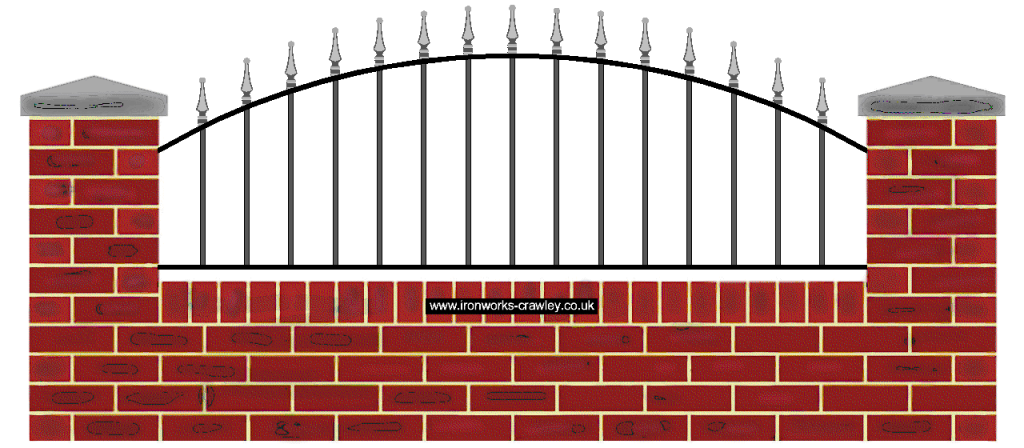
This is a full arch, This only really works well, as a one off or when there are multiple panels of the same size. When there are panels of different lengths. It creates issues where each arch has to be a different shape
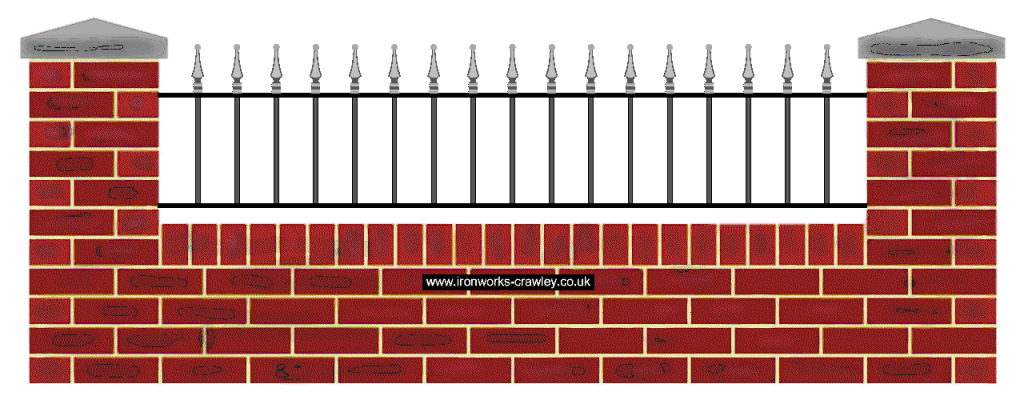
This is the standard ladder type railing, the simplest to make as all upright bars are the same length, allowing a saw stop to be set. Making cutting quicker.
Top decoration
There is a range of things that could be done for decoration on top of the railing.

Decorative railing heads are an obvious and common choice. There is a wide choice of designs. because railing heads are common to gates and railing these have their own page
to be expanded
Technical details
On wall railing it is usual to have 40mm clearance above the wall, on fencing it is usual to have about 75mm. Railings are usually made 10mm under size on length.
to be expanded
Conclusion
Railings don’t need to be a flat ladder type, there are other options. The flat ladder type option is always going to be the cheapest as it is the simplest to do.